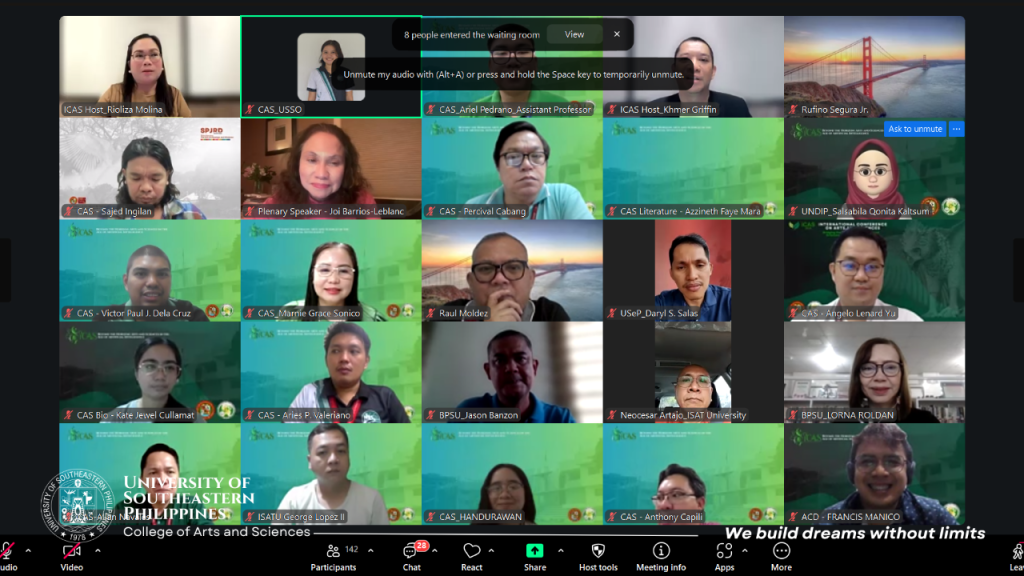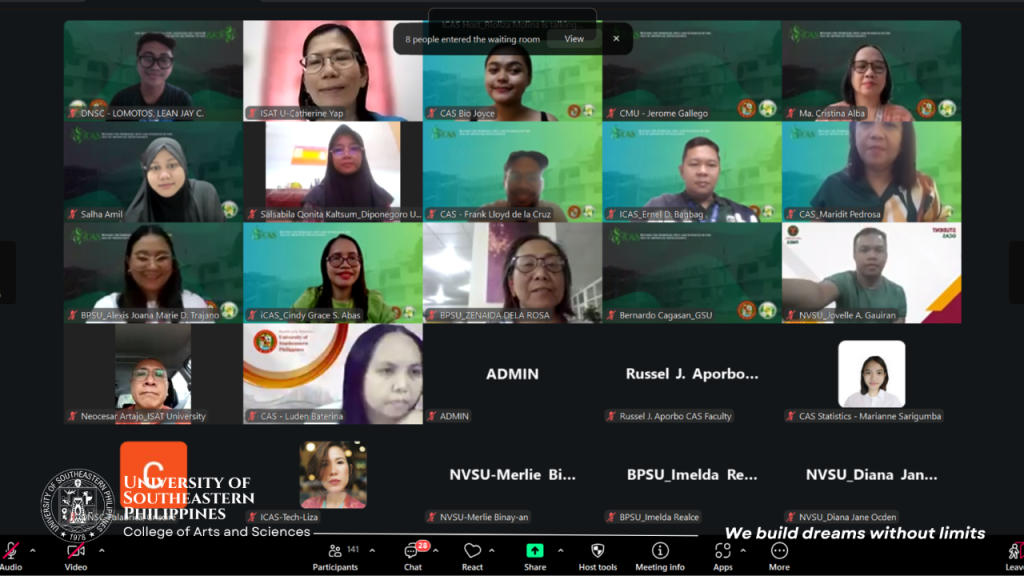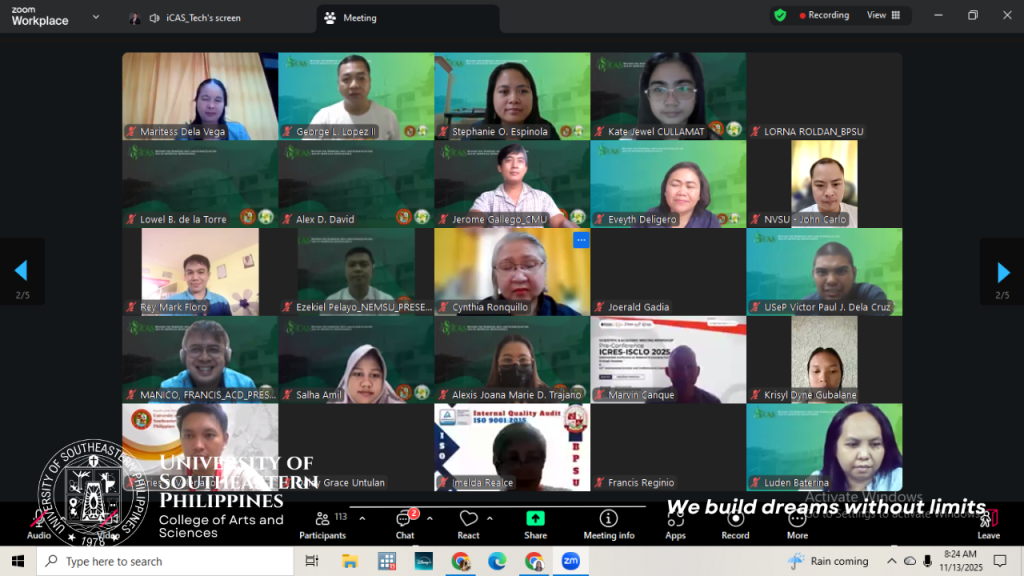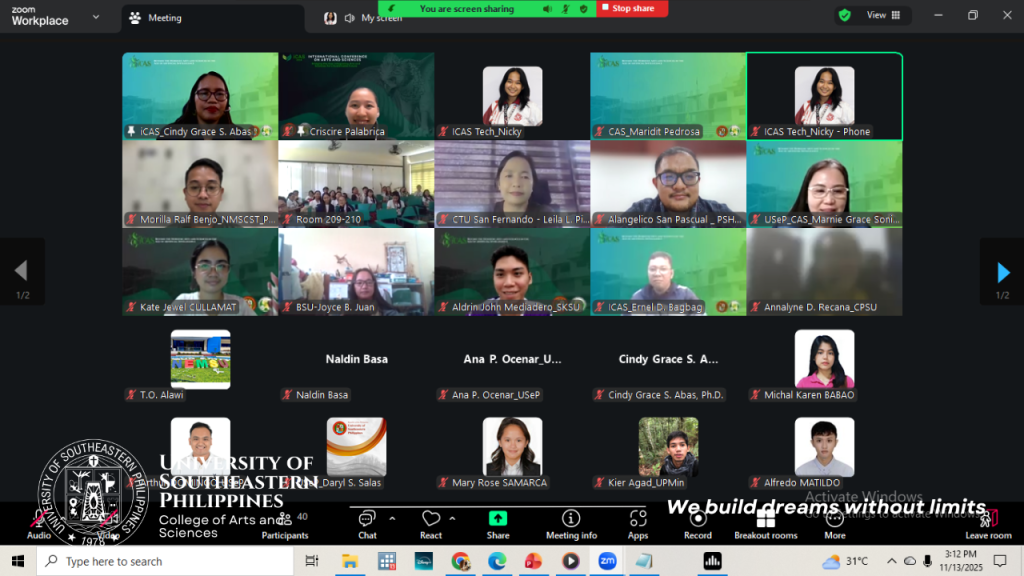





On November 13–14, 2025, the University of Southeastern Philippines’ 5th International Conference on Arts and Sciences (ICAS 2025) soared into the digital realm, bringing together thinkers, creators, and innovators from across the Philippines and beyond. Under the theme “Beyond the Horizon: Arts and Sciences in the Age of Artificial Intelligence,” the conference explored the frontier where human ingenuity meets AI, illuminating new pathways for knowledge, creativity, and collaboration. True to the owl of the CAS insignia—symbol of wisdom, vigilance, and insight—ICAS 2025 guided participants through interdisciplinary explorations that bridged science, art, and technology, revealing how AI reshapes the way we understand and advance the world.
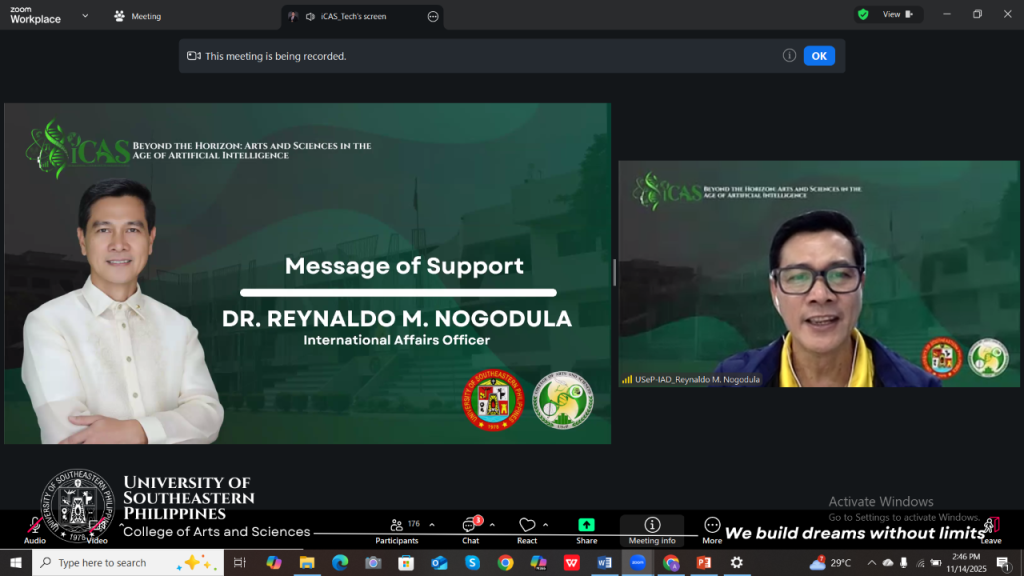
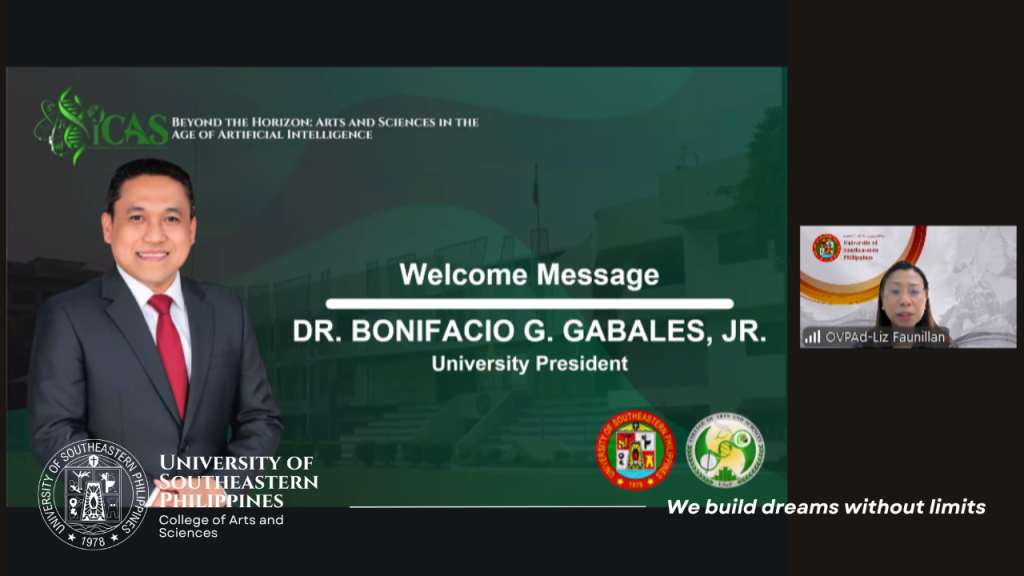
The opening message delivered by Dr. Maria Luisa Faunillan, Vice President for Administration, on behalf of USeP President Dr. Bonifacio G. Gabales, Jr., immediately grounded the event in purpose and responsibility. “As scholars, teachers, and researchers, we are here not only to share findings but to shape how AI is understood and applied in ways that are humane, ethical, and useful to our communities.” It was a reminder that as AI accelerates, wisdom—not speed—must lead. This was echoed by Dr. Ernel D. Bagbag, RDCAS Center Manager, who reinforced the University’s global commitment: “The 5th International Conference on Arts and Sciences… embodies USeP’s strong commitment to advancing internationalization with ASEAN and beyond.” He emphasized that as “AI continues to reshape the ways knowledge is produced, communicated, and applied,” ICAS stands as a vital space for reflection and collaboration.
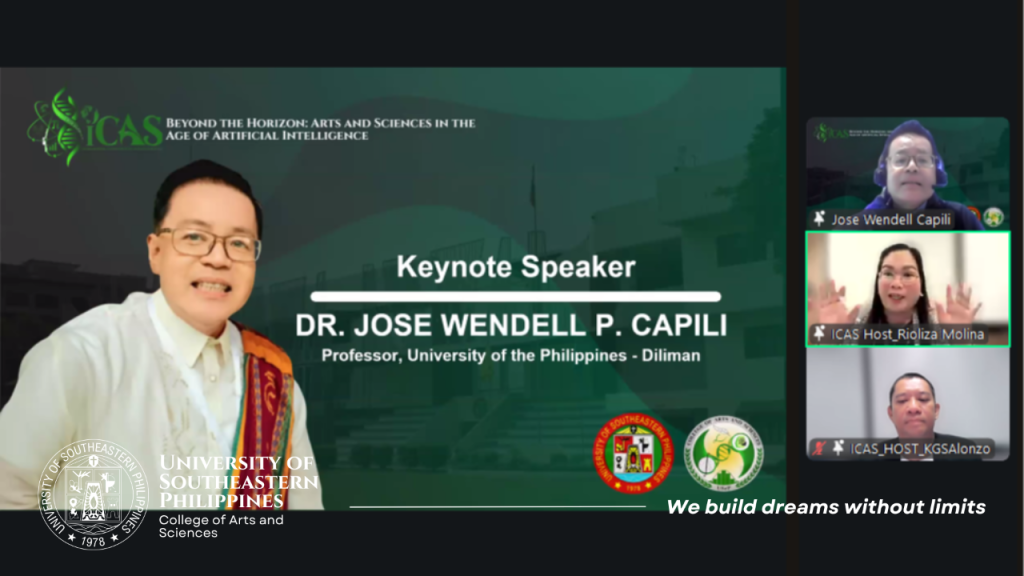
The keynote address by Dr. Jose Wendell P. Capili set the intellectual tone for Day 1. With clarity and urgency, he warned of cultural invisibility in an algorithmic world: “We are not going to eliminate AI, it is already there, but we have to be critical… because AI does not necessarily include things that are local to us.” He challenged participants to resist superficial narratives, insisting, “We must choose the difficult, honest, and resource-aware stories… the enduring, decentralized, and fiercely defended truth of our stories.” His call to defend localized, grounded narratives echoed the owl’s ability to see beyond distortions and into deeper truths.
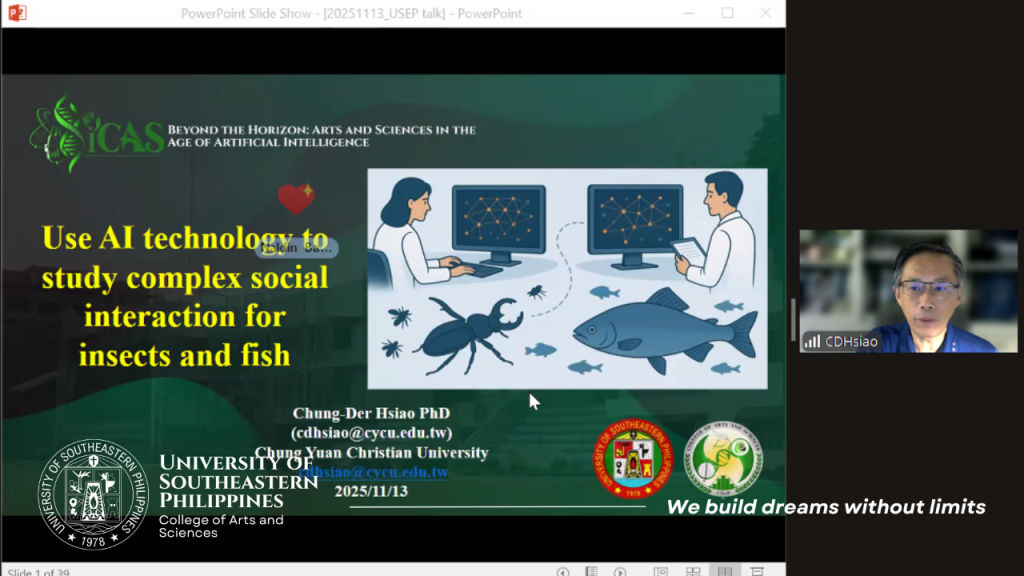
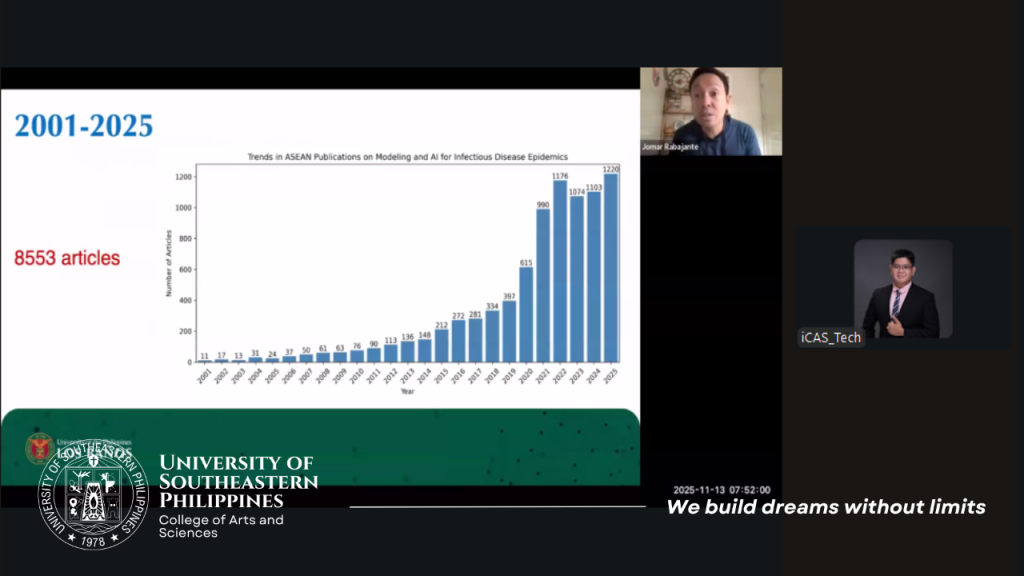
The morning continued with insights that extended across disciplines. Dr. Jomar F. Rabajante, Dean of the UPLB Graduate School, reminded ASEAN scholars of their shared responsibility, noting that “Knowledge transfer and training, and shared technical expertise are important since not all ASEAN countries have strong epidemiological modeling research infrastructure.” This was followed by Dr. Chung-Der Hsiao of Chung Yuan Christian University, whose work demonstrated AI’s potential to transform scientific study: “You don’t have to waste your time to take the risk by yourself, the computer can do it for you.” Together, the plenaries exemplified the interdisciplinary reach of the CAS mission.
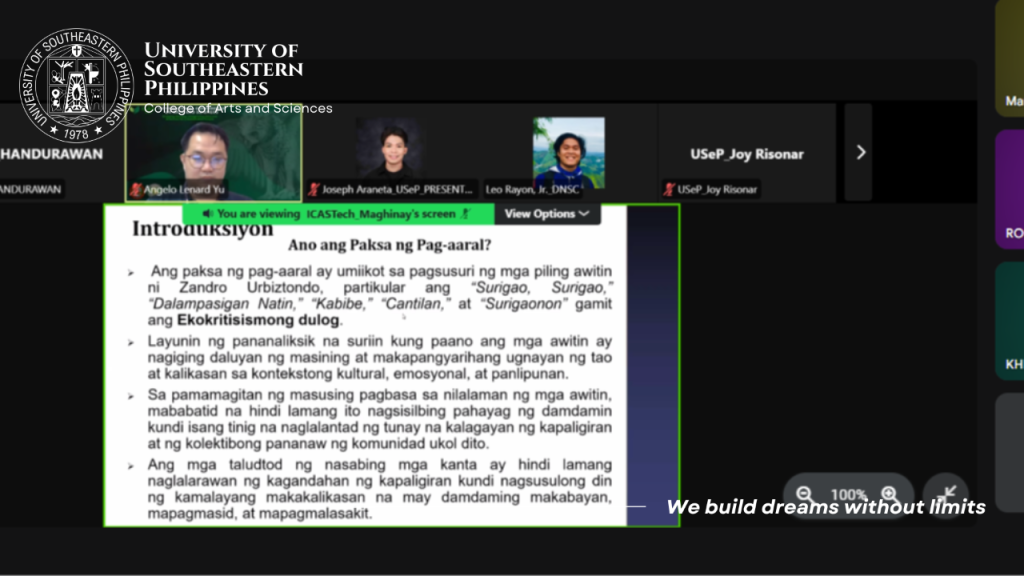
In the afternoon, ICAS shifted into parallel sessions spanning Mathematics, Natural Sciences, Statistics, Language and Literature, and Social Sciences—a seamless testament to the CAS insignia’s interconnected design. Research on mathematical problem-solving, biodiversity, statistical modeling, ecological music analysis, governance, and cultural identity highlighted how AI intersects differently across fields yet raises shared ethical questions. Moderated by Dr. Ariel C. Pedrano, Dr. Cindy Grace S. Abas, Dr. Anthony F. Capili, Dr. Angelo Lenard E. Yu, and Assoc. Prof. Luden L. Baterina, these sessions illustrated how interdisciplinary inquiry thrives when nurtured under a unifying theme.
Day 2 began with a reflective pulse. Asst. Prof. Victor Paul J. Dela Cruz captured the essence of the previous day, stating, “We began with over 500 participants… Three speakers, three disciplines, one insight. AI is neither good nor evil. It’s a tool, and the question is who holds it and for what purpose.” His remarks framed the second day as an invitation to deepen understanding rather than simply continue discussion.
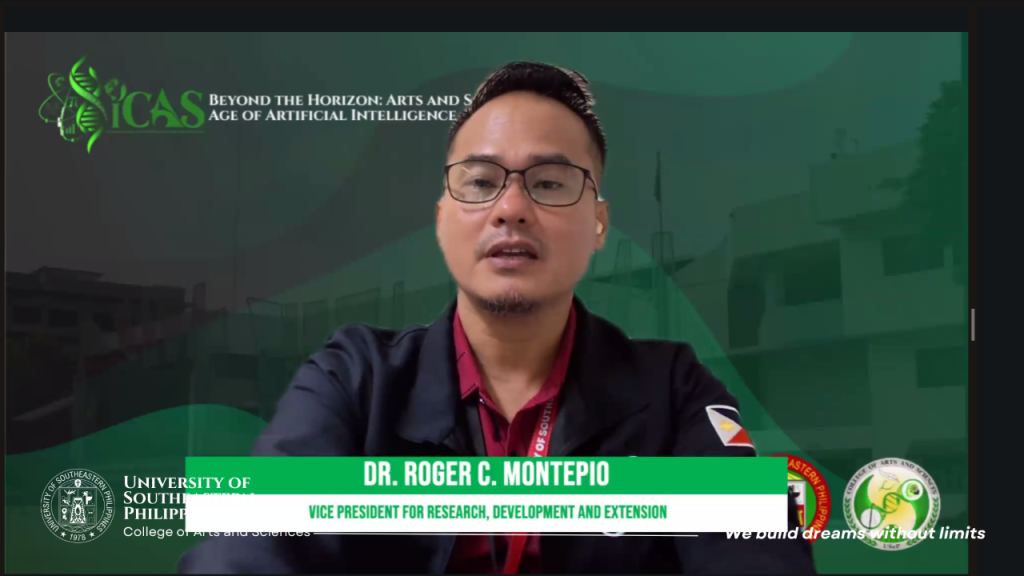
This was followed by a message from Dr. Roger S. Montepio, Vice President for Research, Development, and Extension, who honored ICAS as “a milestone of interdisciplinary dialogue, scholarly exchange, and global collaboration.” He emphasized that “Artificial intelligence is not merely a tool. It is a paradigm shift,” urging participants “to look beyond the horizon… in nurturing inclusive, ethical, and interdisciplinary futures.”
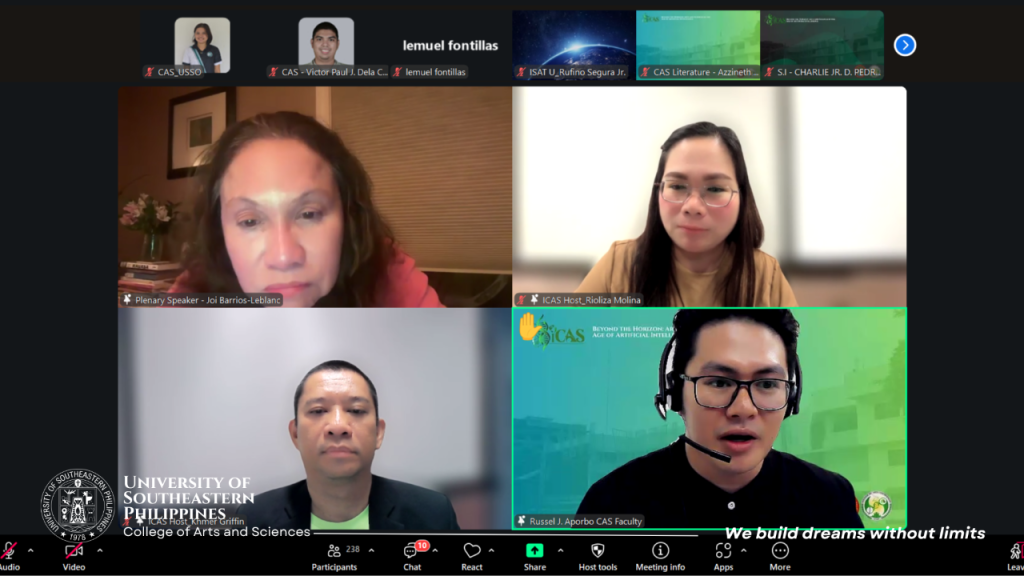
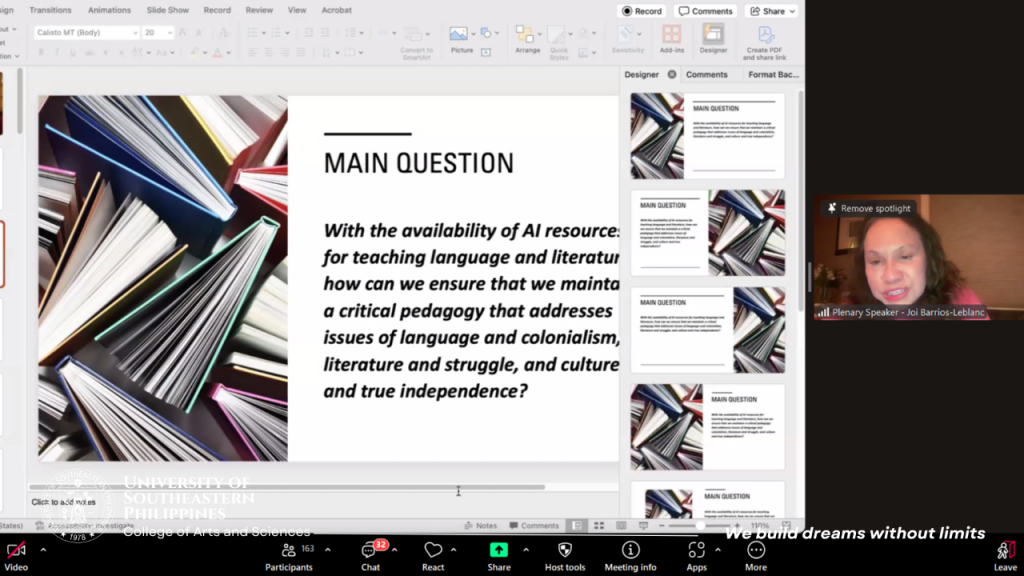
The plenary of Dr. Joi Barrios-Leblanc, Professor at the University of California, Berkeley, brought the conversation into the classroom, demonstrating how AI reshapes pedagogy and linguistic practice. She shared, “Most of us during our research have discovered that AI can facilitate literature review…” while stressing the need for student agency and ethical analysis: “Language is not neutral and we must look at ideologies and biases that may be contained in both language and artificial intelligence tools.” She affirmed that “AI should assist and not replace academic work… the tools should help us improve what we’ve already written.” Her talk underscored that wisdom in teaching requires balancing innovation with critical reflection.
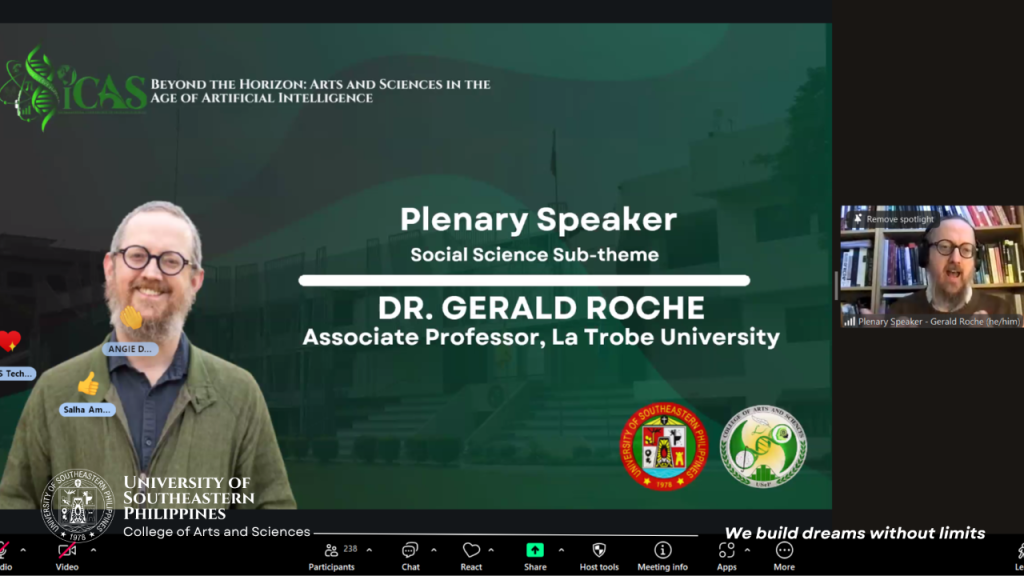
The final plenary by Dr. Gerald Roche, Associate Professor at La Trobe University, introduced the sobering realities of AI in relation to Indigenous language rights. He asserted, “There’s been a systematic process of genocide… and the key element… has been language oppression.” His experiments with AI tools revealed troubling tendencies: “ChatGPT is perfectly capable of and willing to circumvent… prior and informed consent,” and that large language models “violate protocols… steal intellectual cultural property… and produce harmful stereotypes.” He warned that proposed solutions requiring more extraction from Indigenous cultures are “not a good solution to that problem.” His insights reminded participants that the horizon of AI is not only technological but deeply ethical, cultural, and political.
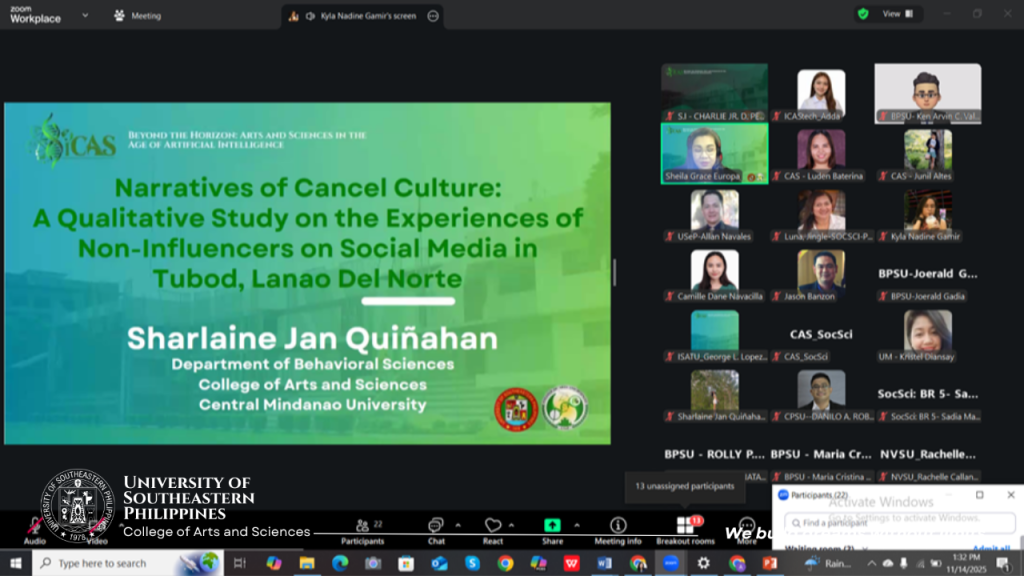
In the afternoon, ICAS continued its interdisciplinary momentum through parallel sessions in Mathematics, Natural Sciences, Statistics, Language and Literature, and Social Sciences—once again reflecting the CAS insignia’s interconnected design. The sessions offered brief but meaningful glimpses into how AI is shaping mathematical inquiry, ecological and biodiversity studies, statistical modeling, literary and media analysis, and contemporary social experiences. Moderated by Dr. Ariel C. Pedrano, Dr. Cindy Grace S. Abas, Dr. Anthony F. Capili, Dr. Angelo Lenard E. Yu, and Assoc. Prof. Luden L. Baterina, these breakout discussions demonstrated how diverse fields converge under a shared theme, revealing AI’s distinct yet interconnected impact across the arts and sciences.
Across two days, ICAS 2025 demonstrated that to navigate the age of artificial intelligence, the academic community must embrace the CAS owl’s wisdom—clear-eyed, ethically vigilant, and interdisciplinary at its core. Looking beyond the horizon requires recognizing that AI’s future depends not on the technology itself, but on the human values, cultural truths, and collective insight that guide its use. In uniting arts and sciences under the lens of artificial intelligence, ICAS 2025 stood as a testament to the College of Arts and Sciences’ mission to guide society into an AI-empowered future that remains firmly, and wisely, human.